
The 200-Meter Rule: Why Most Costa Rica Beachfront Is Leased, Not Owned
A consultant who has bought and sold on both sides of the maritime zone line explains concessions, titles, and the paperwork that separates them.
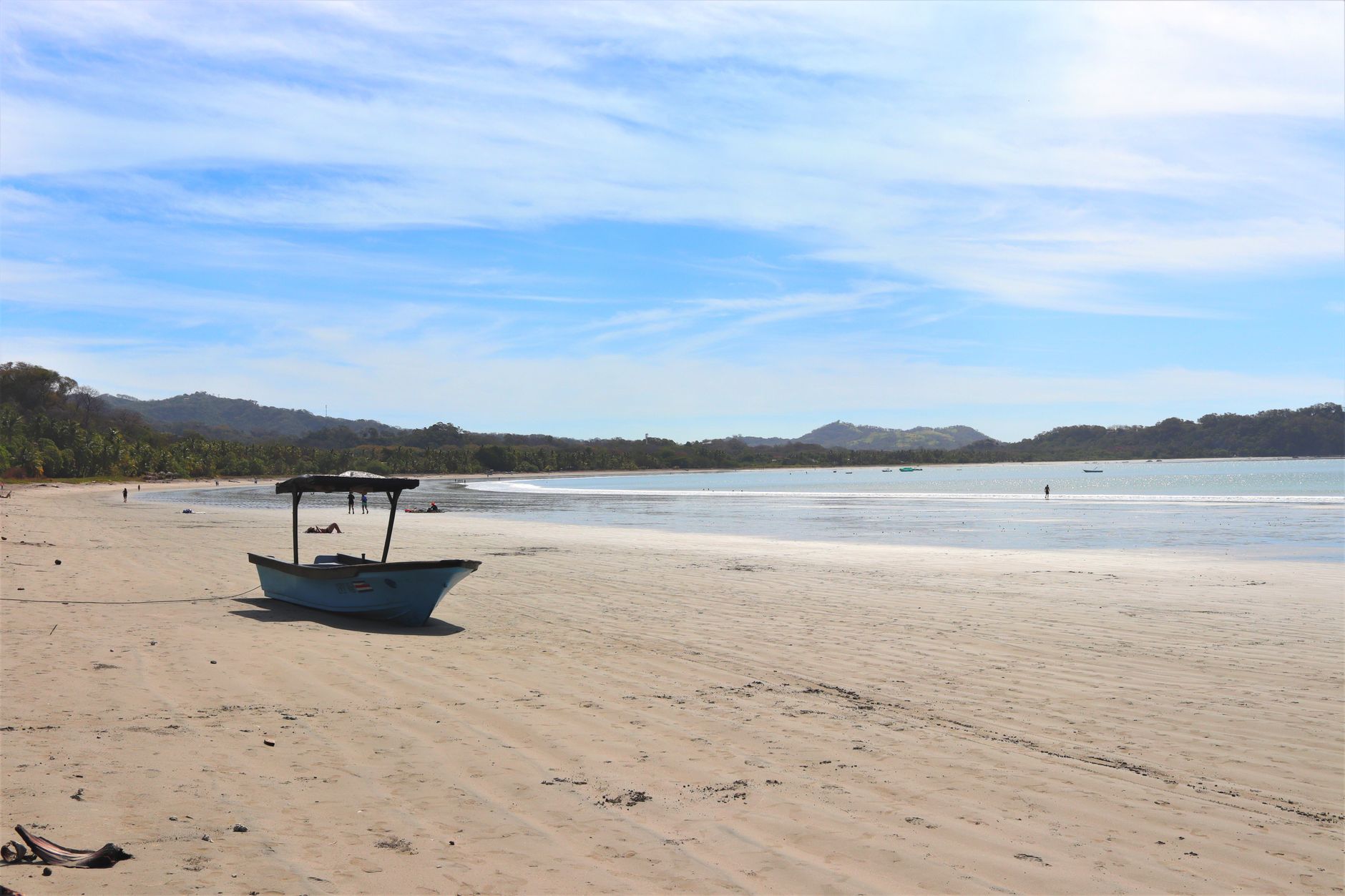
In March of 2019, a client of mine handed over a $40,000 deposit on what the listing called "titled beachfront" just south of Tamarindo. His lawyer pulled the folio at the Registro Nacional the following week. There was no title. There was a concession with four years left on it, held by a corporation that was 100% foreign owned, which arguably made the concession itself void. He got most of the deposit back. It took eleven months.
I moved here in 2014 and I've bought and sold both titled and concession property since. This distinction is the single most misunderstood thing in Costa Rican real estate, and it's not close. So let me lay it out the way I wish someone had for me.
What is the maritime zone (ZMT) in Costa Rica?
Costa Rica's Ley 6043, passed in 1977, declared the first 200 meters inland from the mean high tide line to be public property. The state owns it. Full stop.
That strip splits in two. The first 50 meters is the public zone. Nobody can own it, build on it, or fence it. The next 150 meters is the restricted zone, where the local municipality can grant a concession, which is a lease. You get use rights for a set term. You do not get ownership.
Sand-in-your-toes beachfront in Costa Rica is almost always concession land. Not titled. When a listing says "beachfront title," your default assumption should be that it's wrong until the Registro Nacional says otherwise.
Is any Costa Rica beachfront actually titled?
Yes, and it's the exception that keeps this confusing. Titles that were properly registered before the 1977 law survived it. And a handful of areas were carved out of the ZMT entirely: the town of Jacó, the city of Puntarenas, parts of Limón, plus scattered old titles along Guanacaste that trace back to land grants from another century.
Truly titled oceanfront trades at a premium of 30% to 60% over comparable concession land in my experience. And it moves fast.
But here's the practical answer for most buyers: titled property starts at meter 201. A lot up the hill with a full ocean view is regular fee-simple property, same as a house in San José. Something like Lot 27 at Mar Vista in Nacascolo, a $359,000 ocean-view lot in the hills near the Papagayo peninsula, is exactly that play. You see the water every morning. You hold a real title. The ZMT never touches you.
How does a beach concession actually work?
A concession is granted by the municipality, usually for 20 years, sometimes as short as 5. It's registered in a separate concessions registry at the Registro Nacional, not in the ordinary property registry. You pay an annual fee called a canon, typically 2% to 5% of the assessed value depending on approved use. A tourist-use concession assessed at ₡150 million pays around ₡6 million a year, which works out to roughly $11,800 at the BCCR reference rate of about ₡508 per dollar.
Renewals are normally routine if you've paid your canon and complied with the zoning plan. Normally.
Now the part that eliminates a lot of foreign buyers. By law, a foreigner who hasn't held legal residency for at least five years cannot own more than 49% of a concession. The same rule applies to a corporation that is majority foreign owned. There are structures floating around that "solve" this with a Costa Rican partner holding 51% on paper. I watched one of those arrangements blow up in Playa Potrero and cost the gringo side most of their investment. Don't.
Concession or titled: which should you buy?
If the budget allows, titled. Every time. That's my bias after twelve years here and I'll defend it.
A title is yours. You can mortgage it, since Banco Nacional and BAC will lend against titled property while essentially no bank will touch a concession. You can pass it to your kids without a municipal approval process. You'll never sit in a waiting room at the Municipalidad de Santa Cruz wondering if your renewal file moved this year.
But concessions are not scams. They're leases with paperwork, and some of the best-run beachfront hotels in Guanacaste sit on them. The tradeoff is price. Concession beachfront in Sámara or Esterillos can run 40% to 50% below what equivalent titled land would cost, if equivalent titled land even existed nearby, which it usually doesn't. For a boutique hotel operator who can't buy that view any other way, the math can work.
Here's what nobody tells you: many coastal municipalities still have no approved plan regulador costero, the INVU-sanctioned coastal zoning plan that is a legal precondition for granting concessions at all. Without one, no new concessions get issued and plenty of expired ones sit in limbo for years. So a real chunk of what gets sold on the beach isn't even a concession. It's "possession rights" or a permiso de uso, a revocable permit, which is close to nothing. People pay six figures for close to nothing more often than you'd think.
How do you verify title vs concession before you pay anything?
This is a 48-hour job for any competent lawyer and it costs a few hundred dollars. Cheap insurance.
First, pull the folio real at the Registro Nacional. A digital certificate through rnpdigital.com runs about ₡3,000. Titled property shows in the Registro Inmobiliario with a matrícula number. A concession shows in the concessions registry with a term, an approved use, and the named holder. If the seller can't point to either, walk.
Second, if it's a concession: confirm the canon is current at the municipality, confirm the years remaining (I wouldn't pay full price for anything under 10 years without a renewal already filed), confirm the district has an approved plan regulador, and confirm the holding corporation's shares comply with the 49% rule.
Third, match the plano catastrado against the actual boundaries with a surveyor on site. The 50-meter public zone line matters. I've seen "beachfront" builds with a pool corner sitting illegally inside it, and there is no fixing that.
What if you skip the beach entirely?
Honest answer: a lot of my clients end up happier inland or up the hill. Maintenance on true beachfront is brutal. Salt eats everything, so budget 2% to 3% of the home's value per year just to stand still. And on concession land, the legal layer we just covered never fully goes away.
Titled land near the beach but outside the ZMT is my favorite value category. This agricultural lot at Playa Órganos on the Gulf of Nicoya side of Puntarenas is listed at $75,000, a number that doesn't exist anywhere near the sand in Guanacaste. And if the ocean is optional for you, the Central Valley simply buys more per dollar than any coastline. A quinta in Turrúcares de Alajuela at $505,063 gets you land, mature fruit trees, and a 25-minute drive to the international airport.
Spend an hour comparing homes for sale across Alajuela against homes in Guanacaste, then against beachfront concession asking prices. The gap is educational.
Frequently asked questions
Can a foreigner buy beach concession property in Costa Rica?
Only up to 49%, unless you've held legal residency for five years or more. The same cap applies to corporations that are majority foreign owned. Titled property has no such restriction. A foreigner can own 100% of it with no residency at all, same rights as a citizen.
How do I know if a beach property is titled or a concession?
Order a registry report from the Registro Nacional. Titled property appears in the property registry with a matrícula. A concession appears in a separate concessions registry showing the term, holder, and approved use. If the property shows in neither, you're being offered possession rights, and you should price that risk hard or walk away.
What happens when a concession expires?
You apply to the municipality for renewal, ideally a year or more before expiry. If the canon is paid, the plan regulador is in place, and you've complied with the approved use, renewal is usually granted. But processing can drag for years in some municipalities, and you carry that uncertainty, and the resale discount that comes with it, the entire time.
Browse every for-sale and rental listing in Costa Rica on one map, in English or Spanish.