
Vacant Land in Costa Rica Can Get Expensive Fast: Squatters, Taxes, and Title Fraud in 2026
Absentee owners in Costa Rica can protect land, but only if someone is watching the property, checking the title, and paying the boring bills on time.
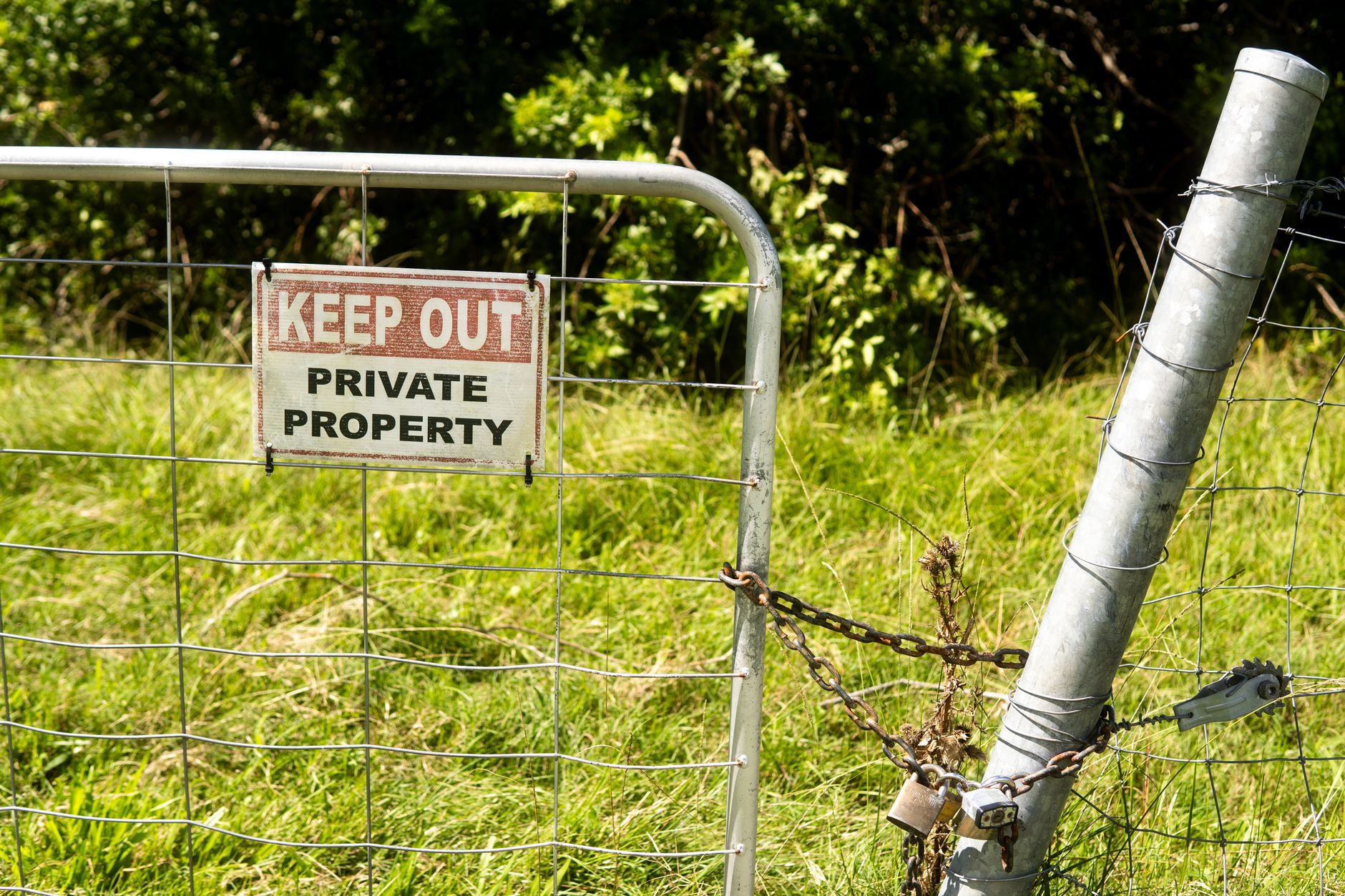
A client called me from Texas after a neighbor in Naranjo sent him a photo of smoke rising from his finca.
Not a wildfire. A cooking fire.
Someone had cut a rough entrance through the living fence, strung plastic sheeting between two trees, and started staying on his land. The owner had not visited in 18 months. The municipal taxes were behind. The grass was shoulder-high. To anyone passing by, it looked forgotten.
That is the exact type of property that causes trouble in Costa Rica.
I moved here in 2014. I have bought here, sold here, sat in municipal offices, waited at Registro Nacional, argued over plano catastrado issues, and watched foreign owners learn the same hard lesson: land does not protect itself.
Costa Rica is not lawless. But absentee-owned, unfenced, tax-delinquent land invites problems. Squatters may claim occupation rights after a short period if the owner does nothing, and long-term adverse possession claims can become serious after years of public, peaceful, owner-like possession. People often simplify this as “rights within a year and title after ten.” Real cases depend on facts, land type, documents, and court rulings, but the warning is fair.
And fraud rings do target vacant-looking parcels.
Can squatters really take land in Costa Rica?
Yes, they can create legal and practical problems. No, they do not magically become owners overnight.
Costa Rica has legal concepts around possession, occupation, and prescripción adquisitiva, often translated as adverse possession. If someone occupies land openly, peacefully, continuously, and as if they are the owner for enough time, they may try to claim rights. Ten years is the number people talk about for ordinary acquisitive prescription, but please do not use a blog article as your legal strategy.
Talk to a Costa Rican attorney.
The bigger issue is earlier than ten years. If someone gets established, builds a rancho, plants crops, brings animals, receives mail, or convinces neighbors they have permission, removing them can become slower and more expensive. Police may treat it as a civil matter. A court process may be needed. Your $40 padlock from EPA will not fix that.
Here is the unglamorous truth: the owner who visits, pays taxes, fences, posts signs, keeps a caretaker, and keeps documents clean usually has a much easier time than the owner who disappears for three years.
What makes land look abandoned?
Vacant land has a look. Locals notice it faster than foreigners do.
Tall grass.
No fence repairs.
No vehicle tracks.
No caretaker.
No utility activity.
No fresh survey markers.
No one asking questions in town.
Municipal taxes unpaid for several years.
A corporation owner with an inactive status because the annual corporate tax was ignored.
I have seen beautiful properties near Atenas, San Ramón, Santa Cruz, and the southern Pacific fall into this pattern. Not because the owners were careless people. They were busy. They trusted that a titled property in the Registro Nacional was enough.
It is not enough.
If you own 5,000 m2 outside San Ramón and you live in Toronto, someone needs to physically lay eyes on it. Once a month is better than once a year. Twice a month is not crazy for higher-risk parcels.
A property such as San Ramn Alajuela listed at US$479,000 is the kind of asset where I would want a documented watch plan, title checks, tax receipts, and a named local contact. Not because San Ramón is bad. It is not. But value plus distance plus absentee ownership equals exposure.
What should absentee owners do first?
Start with proof. Not vibes.
Pull a current certification from Registro Nacional. Confirm the owner, property number, liens, easements, annotations, mortgages, and any judicial warnings. Check the plano catastrado against the property description. If the survey plan is old, mismatched, or vague, deal with it before there is a conflict.
Then check the municipality. Every canton is different, but the basic question is simple: are municipal property taxes and services current? Ask for the estado de cuenta. Pay the balance. Keep receipts.
Property tax in Costa Rica is generally 0.25% of the registered property value per year. So a property declared at US$200,000 might have an annual municipal property tax around US$500, depending on exchange rate and local charges. Many people under-declare values. That can create its own problems at sale time, insurance time, and inheritance time.
Also check the luxury home tax if applicable, the corporate tax if the property is held in a sociedad, and any water association fees. If your corporation owes annual taxes, fix it. Banco Nacional and other banks can handle many public payments, but your attorney or accountant should confirm what applies.
Use the BCCR exchange rate when budgeting in colones. Owners constantly underestimate colón bills because they think in dollars and ignore small local charges. Small bills become ugly after five years.
How much does basic land protection cost?
It depends on location, access, and risk.
For a vacant rural lot, I normally tell absentee owners to budget for a combination of these:
- Caretaker visits: US$40 to US$150 per visit, depending on distance and duties
- Brush cutting: US$80 to US$400 per round for many small to mid-size parcels
- Fence repairs: US$300 to US$2,000 can disappear quickly on a rural boundary
- Basic legal title review: often US$150 to US$400
- Municipal tax check and payment support: varies, often bundled with management
- New survey work: commonly US$700 to US$2,500, more for complex land
- Signage: US$50 to US$250 for durable “propiedad privada” signs
Cheap management is not always cheap. A guy who says “sí, yo paso viendo” for US$25 a month may be fine if he is your cousin. If he is a stranger with no reporting, no photos, no GPS pins, and no relationship with neighbors, you are buying hope.
Hope is not management.
Why do title fraud rings target vacant-looking parcels?
Because nobody answers the phone.
Fraudsters look for owners abroad, inactive corporations, old people, dead people, unpaid taxes, and land that appears unused. They may try forged powers of attorney, fake shareholder documents, impersonation, or a rushed sale to a buyer who does not do proper due diligence.
Costa Rica has good public registry systems compared with many countries. Registro Nacional is not some dusty black hole. But a public registry is only as strong as the checks around it. If a fraudulent document gets filed, you want to catch it quickly, not three years later.
Ask your attorney about registry alerts and periodic title monitoring. Some law firms offer this. It is worth it for absentee owners.
Also keep your contact information current with your attorney, accountant, condominium administrator if applicable, and any local caretaker. If everyone has an old Hotmail address from 2009, you are making life easy for the wrong people.
Is fenced land safe from squatters?
Safer. Not safe.
A good fence sends a message. So do locked gates, maintained access roads, signs, trimmed frontage, and neighbors who know the owner’s name.
But fences get cut. Gates get removed. Cows get pushed through weak spots. In Guanacaste, a few months of rainy-season growth can make a lot look abandoned even if you paid someone in February.
This matters in places with active land markets. Buyers browsing Guanacaste homes and land for sale often focus on ocean distance, road access, water letters, and price per square meter. Fair. But I also ask: who is watching the parcel after closing?
Take Lomas De Conchal 9 Santa Cruz Guanacaste at US$98,000. A lot like that may be easier to monitor if there is local community activity and known access. Still, the buyer should verify title, boundaries, HOA or community rules if any, and who can keep eyes on it while the owner is outside Costa Rica.
The same applies in the Central Valley, just with different risks. A property near Heredia may have closer neighbors and better infrastructure, but it can still sit vacant. If you are looking through Heredia homes for sale, ask about municipal standing, corporation status, and actual occupancy. Not just granite counters.
A listing like the 2 Bedroom House for Sale at Apartment For Sale in Ulloa for US$162,689 is a different risk profile from a remote finca. More people nearby. More visibility. But vacant urban homes have their own issues: break-ins, unpaid condo fees, water leaks, and informal occupants who “just stayed for a weekend.”
What documents should an absentee owner keep current?
Keep a digital folder and a paper folder in Costa Rica. Label them like an adult.
You want:
- Current Registro Nacional certification
- Plano catastrado
- Municipal tax receipts
- Corporate tax receipts if held in a company
- Shareholder registry and corporate books, if applicable
- Water availability letters or ASADA receipts
- Electricity account information, if any
- Caretaker agreement
- Photos with dates
- Fence and maintenance invoices
- Attorney contact details
- Emergency contact in Costa Rica
If the property is held in a corporation, keep the corporation alive and compliant. I have watched sales slow down because a seller’s sociedad had missing filings, unpaid corporate taxes, or outdated legal representative information. Buyers get nervous. Banks get slower. Deals die.
INVU also matters if you are checking zoning, urban planning, and development restrictions, especially where regulatory plans and land-use certificates come into play. Before you assume a vacant lot can become cabins, apartments, or a wellness retreat, get the uso de suelo from the municipality and have a professional read it.
Should you hire a caretaker or a formal property manager?
For raw land, a caretaker may be enough. For a house, hire proper management.
The best caretakers are often local people with roots in the area. They know who belongs there and who does not. They hear gossip before you receive an email. In Costa Rica, gossip can be risk management.
But be careful. Do not give informal permission for someone to live on the land “just to watch it” without a written agreement drafted by a Costa Rican attorney. I have seen owners create the very possession problem they were trying to prevent.
Pay by bank transfer when possible. Use written scopes. Ask for dated photos. Require a short report: gate, fence, access, signs, grass, visible occupation, neighbor comments.
Boring? Yes.
Effective? Also yes.
How does a verified search help owners, not just buyers?
Most people think a real estate search is only for shopping. I do not.
A full-market, verified, bilingual search that is refreshed twice weekly, like costaricarealtor.com, helps buyers compare real inventory and pricing. It also helps owners understand whether their land looks stale, under-documented, overpriced, or poorly represented compared with active properties nearby.
That matters because vacant-looking land is not only a squatter risk. It is a market risk.
If a property has an old listing with bad coordinates, no boundary clarity, no tax status, and no local contact, serious buyers hesitate and opportunists lean in. Clean public presentation does not replace legal protection, but it supports it.
Behind the scenes, we help owners keep land watched, titled and tax-current and connect them to trustworthy local management. Not in a flashy way. It is a lot of phone calls, receipt chasing, caretaker photos, registry checks, and awkward conversations about unpaid municipal balances.
This is where a bilingual platform helps. Owners abroad often do not speak enough Spanish to call the muni in Santa Cruz or San Ramón and ask the right questions. Local staff may not explain the issue in English. One missed detail can delay a sale or leave a property exposed.
Here’s what nobody tells you about protecting land here
The biggest risk is not always the squatter.
It is the owner’s fantasy that Costa Rica works like a storage unit.
Buy it. Lock it. Come back later.
No.
Land here is social. Neighbors notice who visits. Municipalities track taxes, but not always in the way you expect. Boundaries may be known by a 72-year-old farmer better than by your PDF survey. A dirt road can shift. A creek can eat a corner. A caretaker can die and nobody tells you for six months.
And if you bought emotionally, especially during a hot market, you may not have checked the boring things. Water. Access. Zoning. Easements. Corporate status. Realistic resale demand.
I like Costa Rica. I built a life here. But I am blunt with foreign buyers because the brochure version hurts people.
What should you do this month if you own vacant land?
Do these five things before August 2026.
First, order a fresh Registro Nacional certification.
Second, ask the municipality for a current tax statement and pay any balance.
Third, get new dated photos from all boundaries, the entrance, and any structures.
Fourth, put a written watch plan in place with a local person or manager.
Fifth, ask a Costa Rican attorney if your title, corporation, and possession risk are clean.
If you have not visited in more than 12 months, go or send someone competent. Not a friend on vacation who can “swing by after the beach.” Someone competent.
For higher-value properties, quarterly title checks are reasonable. For rural land with prior trespass issues, monthly physical checks may be cheap insurance.
Frequently asked questions
Can a squatter get rights to my Costa Rica land after one year?
They may create occupation or eviction complications much sooner than owners expect, especially if the owner ignores the situation. Title claims usually require much longer possession, often discussed as ten years, but facts matter. Get a Costa Rican attorney involved fast.
Does paying municipal taxes stop adverse possession?
It helps show ownership and responsibility, but it is not a magic shield. You still need possession control: fencing, inspections, signs, maintenance, and quick action if someone enters.
How often should absentee owners check vacant land?
For low-risk lots, at least every 60 to 90 days. For rural, unfenced, high-value, or previously trespassed land, monthly checks are smarter. Ask for dated photos and written notes every time.
Browse every for-sale and rental listing in Costa Rica on one map, in English or Spanish.